
How Care Solutions uses visual, AI-powered test automation to safeguard complex Progress OpenEdge applications—without programming, without invasive access to the core system and with significantly less manual testing effort.
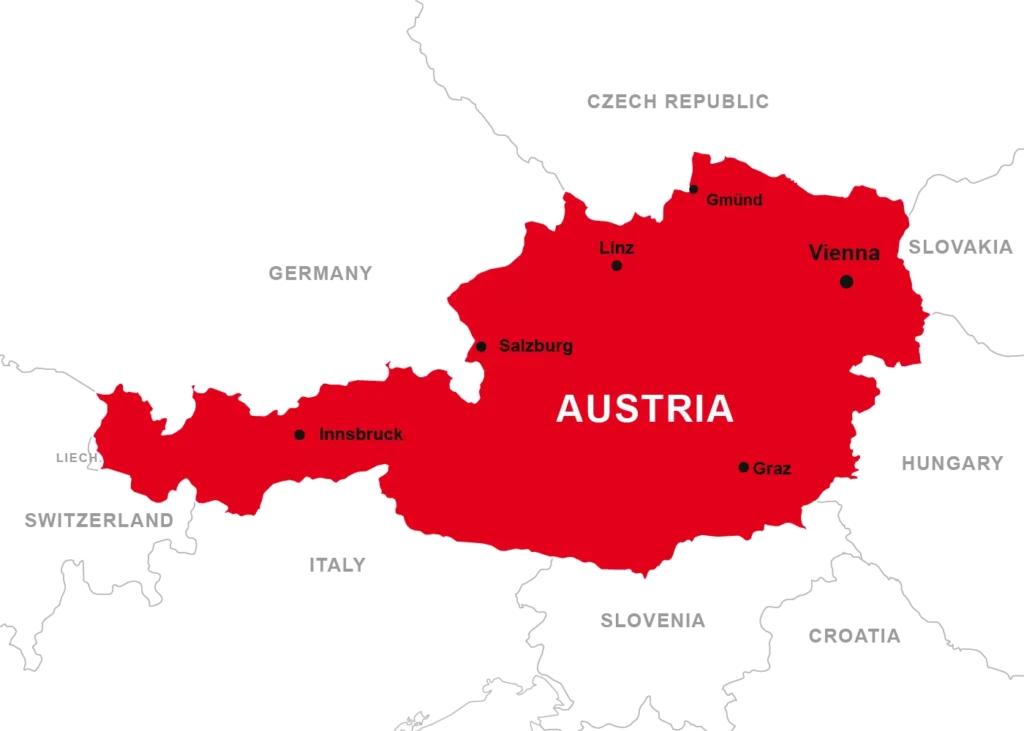
Care Solutions GmbH has its headquarters in St. Veit an der Glan, with development based in Klagenfurt. The company was founded in 2010 and operates across a broad range of business areas, including development, qualification, support & documentation, product management, consulting, regulatory affairs, quality management, and marketing. Its core products are nursing documentation (NCaSol), medical documentation (MedCaSol), and intensive care documentation (CCaSol). Following the acquisition of its predecessor company in 2014, Care Solutions GmbH has held full responsibility for development ever since.
Care Solutions GmbH develops digital solutions for the healthcare sector. Its portfolio includes applications for nursing documentation, medical documentation and intensive care documentation.
These solutions support business-critical workflows in hospitals and healthcare facilities. Reliability, quality and stable releases are therefore essential.
No control over the core system: The underlying system is operated by a partner company, which severely limits direct intervention.
A highly dynamic programming language: The applications are built on Progress OpenEdge — highly dynamic by nature, which makes classic object recognition significantly harder.
High configurability: The systems are heavily configurable, so every customer environment can look different — adding another layer of complexity to testing.
5.9 million lines of code, 80% not unit-testable: The historically grown codebase rules out classic automated unit testing across most of the system.
Manual, experience-based testing: Before each of the two major annual releases, a full manual test pass was required — around a month’s worth of work, with test cases running up to 400 steps.
A failed first evaluation: A vendor with a classic, object-based approach (identifying elements via object IDs) failed to cope with the system’s dynamics and configurability — automation simply wasn’t possible.
Reduce manual testing effort
Despite high system complexity and no access to the underlying core system, manual effort needed to come down significantly — with low-maintenance, stable tests.
Low-maintenance, stable tests
Regression tests needed to keep running reliably even through UI changes — without constant rework tied to technical details.
Enablement without coding
QA needed to be able to build and maintain test automation themselves — no programming skills required.
Care Solutions GmbH came across Objentis through a referral. Drvless’s key advantage is its AI-based image recognition: test cases keep working through UI changes because they recognize visual content rather than technical object IDs — if, say, only a button’s color changes, the content stays the same and the test keeps running. This keeps maintenance overhead to a minimum — exactly what was missing during the earlier evaluation with the other vendor.
Features Care Solutions GmbH uses
1. UI-based recognition:
Test flows keep running stably even if control styles or element layouts change — and even when a new release introduces different internal IDs during development.
2. No-code test creation:
Test cases can be built via capture & abstract and transferred directly into Drvless for execution — no programming knowledge required.
3. Execution lists & scheduler:
Automated test runs (nightly smoke tests, weekly regression tests, stability checks) are bundled into packages and triggered directly from the CI/CD system (Jenkins) at scheduled intervals.
4. Xray integration & dashboard:
Every executed step is logged. Test results are displayed and monitored in a dashboard plugin integrated into Jira, configured to match the required reporting needs.
With Drvless, more than 50% of our tests will run automatically in the future, enabling us to save significant time and gain greater transparency.
You are currently viewing a placeholder content from YouTube. To access the actual content, click the button below. Please note that doing so will share data with third-party providers.
More Information| RESULT | IMPACT |
|---|---|
| Up to 75% automation potential | A significant share of previously manual tests can be automated in the future. |
| Less maintenance effort | Visual recognition reduces dependency on technical IDs and UI details. |
| Greater release stability | Nightly smoke tests, weekly regression tests and stability checks run automatically. |
| Reduced workload for the QA team | Less repetitive testing creates capacity for complex testing and further development. |
| Improved defect detection | Drvless identified configuration issues that were not visible in the previous manual test setup. |
| Greater transparency | Screenshots and step-by-step logs simplify the analysis of failed test runs. |
Care Solutions demonstrates that even complex, dynamic and difficult-to-access legacy applications can be tested successfully with automation.
Instead of relying on technical object IDs and fragile integrations, Drvless focuses on the visible behaviour of the application. This enables tests to remain robust despite UI changes, configuration variants and technological developments.
The result is less manual effort, more transparency and sustainable quality assurance for business-critical healthcare software.
You are currently viewing a placeholder content from Vimeo. To access the actual content, click the button below. Please note that doing so will share data with third-party providers.
More InformationYou are currently viewing a placeholder content from YouTube. To access the actual content, click the button below. Please note that doing so will share data with third-party providers.
More InformationYou need to load content from reCAPTCHA to submit the form. Please note that doing so will share data with third-party providers.
More Information