How Twinformatics uses visual, AI-powered test automation to test legacy systems, SAP, web applications and virtual desktops across technologies—reducing test case maintenance effort by up to 30%.
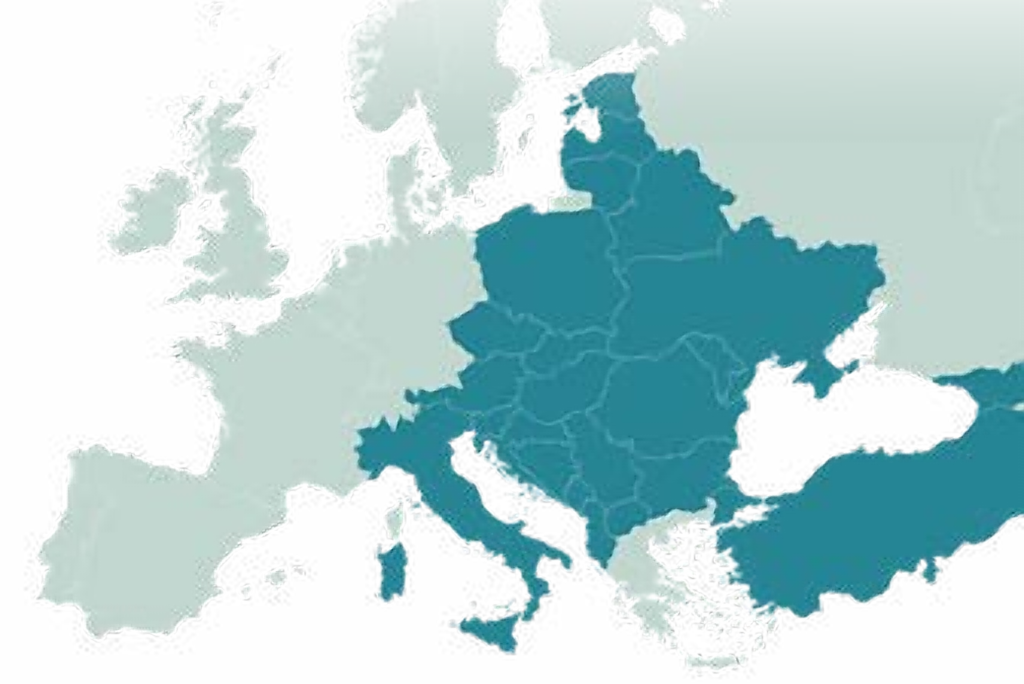
Twinformatics is based in Austria, with a focus on the CEE region through the Vienna Insurance Group, which operates in 25 countries. Its system landscape spans SAP, legacy systems, Java, .NET, and web applications, as well as virtual desktops. The company has approximately 500 employees.
Twinformatics is the IT service provider for the Vienna Insurance Group, headquartered in Vienna with three additional locations in Austria. The company runs a broad, historically grown system landscape — from infrastructure and end-user devices to large-scale insurance solutions — supporting business-critical processes for one of the largest insurance groups in the CEE region.
High pressure to automate: Management asked how existing test automation could be made more efficient, cost-effective, and scalable.
The maintenance trap of traditional tools: Script-based test automation creates heavy maintenance overhead whenever technical IDs, UI elements, or system landscapes change.
Heterogeneous, hard-to-access systems: Some applications were difficult or impossible to automate with traditional tools — for example legacy, streaming, or virtualized applications.
Technical migration projects: Twinformatics needed an approach where test cases could still be reused through technological transitions.
Broad test coverage within tight time windows: Regression tests need to run reliably across many systems within narrow test windows.
Reduce: maintenance and implementation effort in test automation.
Reliable: repeatable end-to-end tests across different technologies and platforms.
Enablement: Test cases should be understandable and buildable by business departments and dev teams alike — without deep coding knowledge.
Twinformatics first trialed Drvless in 2021 on a physical box for demo purposes, then built a scalable client-server architecture for production use together with Objentis. Today, Drvless tests run across roughly 40 virtual desktop instances. The approach is based on visual UI recognition and interacts with applications the way a human would — technology-agnostic and without invasive system integration.
Features Twinformatics uses
Visual UI recognition:
Stable automation even through technical changes, UI shifts, and evolving system technologies.
No-code / natural language:
Test cases can be described in natural language or with blocks; business departments and dev teams understand the logic right away.
Technology independence:
Works across web, desktop, SAP, Java, .NET, Unix, streaming, and virtualized applications.
Reusability through migrations:
Business context — rather than technical IDs — lets similar test cases be reused even after technological changes.

You are currently viewing a placeholder content from YouTube. To access the actual content, click the button below. Please note that doing so will share data with third-party providers.
More Information| RESULT | IMPACT |
|---|---|
| Less maintenance effort | In the first three years, Twinformatics cut maintenance effort for test cases by up to 30%. |
| Faster implementation of new test cases | On average, implementation effort dropped by up to 20% — in hard-to-automate legacy areas, by as much as 40%. |
| Greater reach in test automation | Legacy systems, technical migrations, and complex end-to-end flows are now covered significantly better. |
| Enablement beyond IT | Natural language and block-based logic make test cases understandable and usable for both dev teams and business departments. |
Drvless offers us intuitive access to test automation—even in areas previously considered non-automatable.
Twinformatics demonstrates how business-critical end-to-end tests can be sustainably automated even across heterogeneous and historically evolved insurance systems.
Drvless combines visual AI automation with understandable, business-oriented test logic. This reduces technical dependencies, lowers maintenance effort and expands test coverage in areas where conventional automation is often too costly or too fragile.
You are currently viewing a placeholder content from Vimeo. To access the actual content, click the button below. Please note that doing so will share data with third-party providers.
More InformationYou are currently viewing a placeholder content from YouTube. To access the actual content, click the button below. Please note that doing so will share data with third-party providers.
More InformationYou need to load content from reCAPTCHA to submit the form. Please note that doing so will share data with third-party providers.
More Information